At a glance
| Item | Detail |
|---|---|
| Also called | Interac debit, debit card payment, "debit" at the till |
| French term | Débit Interac |
| Where it sits in the payment flow | At the card step. Interac routes the request between your processor and the customer's bank. |
| Who controls it | Interac sets the network rules. Your processor sets your fee. |
| Does it cost the merchant | Yes. A fee per transaction, set in your contract. |
How it works
Interac Debit has fewer layers than a credit card sale. The bank checks the sale against the customer's own account.
- The customer taps or inserts the debit card and enters a PIN if asked.
- Your terminal sends the request through your processor to Interac.
- Interac passes it to the customer's bank, which checks the account.
- The answer comes back to the terminal, and the receipt prints or is sent.
A Canadian example
A coffee shop in Laval takes 500 Interac sales a month at $20 each, which is $10,000. Say its processor charges a flat 12¢ per sale. That is the price Moneris publishes for its flat plan, as listed in our processors guide. The fee is $60 for the month, or 0.6% of those sales. On one $60 sale, the same 12¢ is 0.2%. The fee follows the number of sales, not their size. An example only, not a quote.
What is different in Canada and Québec
- Interac is Canada's own debit service. Visa Debit and Debit Mastercard are separate products, with their own pricing.
- Interac does not publish a merchant rate. Interac's page says merchants pay a processing fee to their acquirer, and that the fee varies by contract.
- Interac's switch fee rises from $0.013985 to $0.014438 per transaction on 1 November 2026. Banks that issue cards and processors that acquire sales pay it, not you.
- In Québec, merchants may not charge consumers a fee for paying by credit or debit card. A sign on the counter does not change that.
- The Code of Conduct gives you 30 to 60 days' notice of a fee increase or a new fee, and a right to cancel without penalty within 70 days after it takes effect.
What it costs and where it shows on your statement
- Your fee: a flat amount per sale, set by your contract. Ask for it in writing, with the fee for taps if it differs.
- What Interac publishes: the switch fee above, and Interac's fees page also says interchange for Interac Debit is currently set at zero, and, in a separate section, lists a contactless interchange structure of $0.020 to $0.055 a transaction by merchant type and sale size. Acquirers pay these, not merchants. Ask your provider which, if any, it passes on to you.
- On your statement: a debit line, usually the number of sales times the flat fee. Work out your credit and debit effective rates separately.
Where CleverPays fits in this step
Interac sets the network rules and the switch fee, and the customer's bank approves or declines each debit sale. Your processor sets the flat fee you pay. CleverPays does not set Interac rules or fees and does not approve or decline debit cards. CleverPays is operated by Groupe Heo Inc., an Agent of Fiserv Canada Ltd.
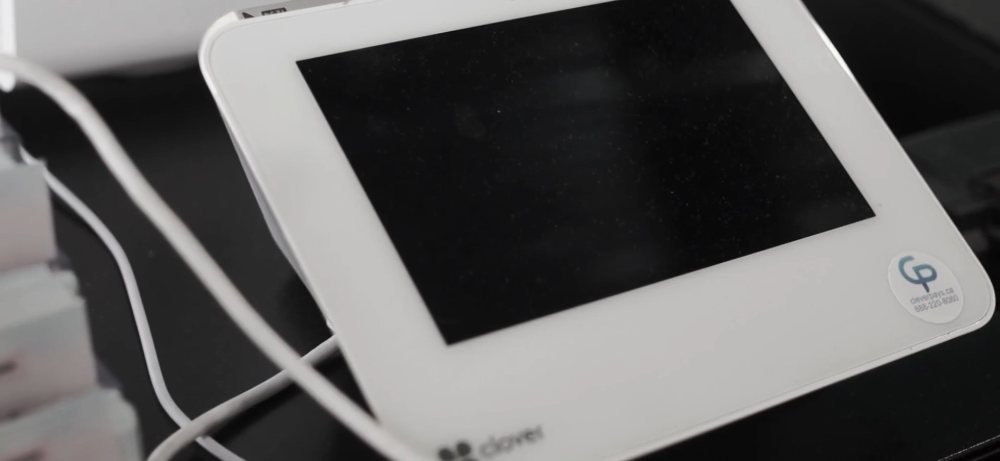
We can read a recent statement with you and show the debit line and the effective rate. We can explain the fee and help you ask your processor the right questions. We can recommend and set up Clover and other terminals, and we answer questions in English and French.
Common mistakes
- Looking only at the credit card rate. Debit is often a large share of sales, and it is priced on its own.
- Assuming a fee is lower than it is because Interac interchange is low. Your contract sets what you pay.
- Adding a debit fee for customers. In Québec that is not allowed, and Visa and Mastercard prohibit it on their debit cards.
Related terms
- Visa Debit and Debit Mastercard: the other debit cards you accept.
- Interchange fee: the fee paid to the card's bank on each sale.
- Contactless payments: tapping a card or phone to pay.
- Interac Flash: a name used for tapping an Interac debit card.
- Chip and PIN: the chip card and secret number used to confirm a debit sale.
- Effective rate: your total fees divided by your total card sales.
Common questions
How much does Interac Debit cost a merchant in Canada?
Interac publishes no merchant rate. You pay your processor a fee per transaction, set in your contract. Look at your statement or ask your processor for it in writing.
Is Interac Debit a percentage or a flat fee?
For most merchants it is a flat fee per sale. Your contract may differ, so check it. A percentage on debit rises with the size of the sale, and a flat fee does not.
Can I charge customers extra for paying by debit?
Not in Québec. The consumer protection office says merchants may not charge a fee for paying by credit or debit card. Visa and Mastercard also prohibit surcharges on their debit cards.
Sources
- Interac, understanding fees, read 6 October 2026.
- Financial Consumer Agency of Canada, Code of Conduct for the Payment Card Industry and merchant rights, as used in our processors guide, read 1 October 2026.
- Office de la protection du consommateur, on card fees in Québec, as used in our surcharging guide.
- Moneris, pricing, 12¢ per Interac sale on its flat plan, read 1 October 2026.
- CleverPays guides: card processing fees, credit card surcharging and best payment processors in Canada.