At a glance
| Item | Detail |
|---|---|
| Also called | 3DS, 3DS2, EMV 3-D Secure. Visa's version is called Visa Secure |
| French term | 3-D Secure (the same name is used) |
| Where it sits in the payment flow | Online checkout, after the shopper enters card details and before the authorization request |
| Who controls it | The card networks set the rules and the issuer decides whether to challenge. Your gateway or checkout platform carries the messages |
| Does it cost the merchant | Mastercard lists a separate 3DS interchange line. Your gateway or platform may also charge for it, so check your agreement |
How it works
Visa's Canadian guide says 3-D Secure 2.0 looks at context about the sale, such as the device, and asks the shopper to verify only when the sale looks high risk. A low-risk sale goes through with no extra step. A higher-risk one may trigger a one-time password or another check.
- The shopper enters their card details at checkout.
- The merchant's 3-D Secure service provider adds the sale data and sends a request to the issuer.
- The issuer's service provider scores the risk. It may ask the shopper to verify, for example with a one-time password.
- The issuer sends the result back to the merchant.
- The merchant sends the sale for authorization, with a flag that shows the result of the check.
A Canadian example
A florist in Québec City sells a $100 bouquet online on a Mastercard World credit card. Mastercard's Canadian interchange table, effective 1 August 2026, lists a Digital Commerce rate of 1.90% for World cards and a separate SecureCode / 3DS rate of 1.70%. On $100, that is $1.90 against $1.70 in interchange. Your processor's markup and the network fees come on top, and Mastercard sets the conditions for each line. The gap is 20 cents a sale, and it repeats on every online order. This is an example only, not a quote.
What is different in Canada and Québec
- 3-D Secure is a global standard. Visa's guide says EMVCo, a standards body owned by the card networks, updated it for remote payments, so the steps are the same in Canada as elsewhere.
- Mastercard's Canadian interchange table has its own SecureCode / 3DS line. In the rows we read, it is lower than the Digital Commerce line for the same card.
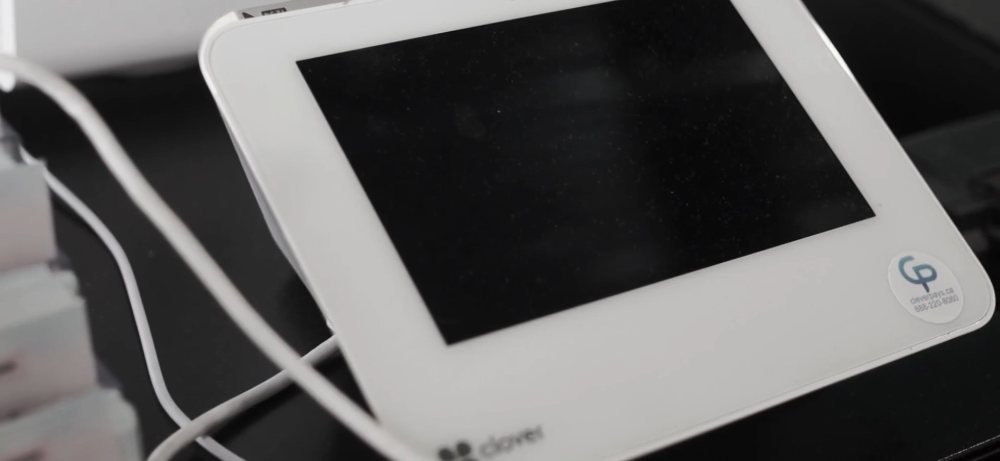
- It is built for remote sales. A chip or tap payment on a Clover device does not use it.
- Québec has no special 3-D Secure rule in the sources we read. The Québec ban on credit card surcharges still applies to online sales, and our surcharging guide explains it.
What it costs and where it shows on your statement
Mastercard publishes the 3DS interchange line described above. Visa's pages do not give a 3-D Secure rate. Interchange appears inside the card fees on your statement, and the label depends on your processor. Any gateway or platform charge for running the check shows on that provider's invoice, not on the card statement. We can find each one with you.
Where CleverPays fits in this step
The card networks write the rules, and the issuer decides, sale by sale, whether to challenge the shopper. Your gateway or checkout platform sends the messages. CleverPays does not set interchange or network fees, does not approve or decline cards and does not set Visa or Mastercard rules. Clover is Fiserv's platform, and Clover devices in Canada work only with Fiserv processing.
We can recommend and set up a gateway for your website and explain how it handles the check. We can read a recent statement with you and show the effective rate and each fee line. We can answer in English and French.
Common mistakes
- Assuming 3-D Secure applies to sales at your counter. It is for online and remote payments.
- Forgetting that your platform may charge for it. Ask what the gateway fee is before you switch it on.
- Reading the Mastercard line as a promise. The conditions for each interchange line are Mastercard's, not yours or ours.
Related terms
- AVS: the address check that compares the billing address with the issuer's record.
- Chargeback: a payment the cardholder disputes through the issuer.
- Liability shift: the rule that moves who carries fraud loss in some cases.
- Payment gateway: the service that carries an online card payment from your site to your processor.
- Interchange fee: the bank-to-bank fee inside each credit card sale.
- Card-not-present: a sale where the card is not physically shown.
Common questions
Does 3-D Secure slow down checkout?
Visa says 3-D Secure 2.0 asks for extra verification only on sales that look high risk. Other sales are not interrupted.
Does 3-D Secure stop chargebacks?
It adds an identity check before the sale is authorized. How a fraud dispute is handled afterward depends on Visa and Mastercard rules and on your agreement, which we can help you read.
Do I need it for in-person sales?
No. Visa describes it as a standard for remote payments. A chip or tap sale on a Clover device does not use it.
Sources
- Visa Canada, 3-D Secure 2.0 infographic (PDF), read 6 October 2026.
- Visa Canada, Visa Secure, read 6 October 2026.
- Mastercard Canada, Merchant interchange rates, consumer credit rates effective 1 August 2026, from the CleverPays evidence file checked 24 September 2026.
- Clover Canada, Pricing FAQ, read 6 October 2026.