At a glance
| Item | Detail |
|---|---|
| Also called | Merchant services provider, acquirer or processor |
| French term | Processeur de paiement |
| Where it sits in the payment flow | Between your terminal and the card networks and banks |
| Who controls it | The processor sets its own markup and terms. Networks set interchange |
| Does it cost the merchant | Yes. Per sale, and often monthly |
How it works
Many firms touch one card sale. The processor sits in the middle. It talks to your terminal on one side and to the networks and banks on the other. Your agreement is usually with the processor or its partner.
- The customer taps, inserts or types a card.
- Your terminal or website sends the sale to the processor.
- The processor routes it to the card network and the issuing bank.
- The issuer approves or declines, and the answer comes back in seconds.
- The money is settled to your bank, minus fees.
A Canadian example
A bookstore in Montréal takes a $60 sale on a debit card at the counter. The processor routes it to Interac. Interac says its interchange is currently set at zero, so the store pays the processor a fee set in its contract. Say that fee is 12 cents. An example only, not a quote. The store pays the 12 cents whatever the size of the sale, and sees it on the statement.
What is different in Canada and Québec
- Canada's Code of Conduct covers the processor. It must give 30 to 60 calendar days' notice of a fee change, and your statement must show the effective rate.
- Most Canadian banks refer business clients to a processor. The agreement you sign is with that processor. Our processors guide shows which bank refers to which.
- Interac debit is priced per transaction through your processor. Interac does not publish a merchant rate.
- Québec merchants cannot add a card surcharge for consumers, so processor fees stay inside your prices.
- A Québec restaurant also needs a certified sales recording system. The processor does not make you compliant.
What it costs and where it shows on your statement
Processors charge a markup on each sale. It may be a percentage, a set amount, or both. Many add monthly, compliance and gateway fees, and some rent the terminal. On the statement, the markup sits with interchange and network fees, or inside one blended rate. Get the term and the cost to leave in writing.
Where CleverPays fits in this step
The processor handles the sale. Visa, Mastercard and Interac set their own rules and rates, and issuers approve or decline each card. CleverPays does not approve or decline cards, and does not set interchange or network fees. CleverPays is operated by Groupe Heo Inc., an Agent of Fiserv Canada Ltd.
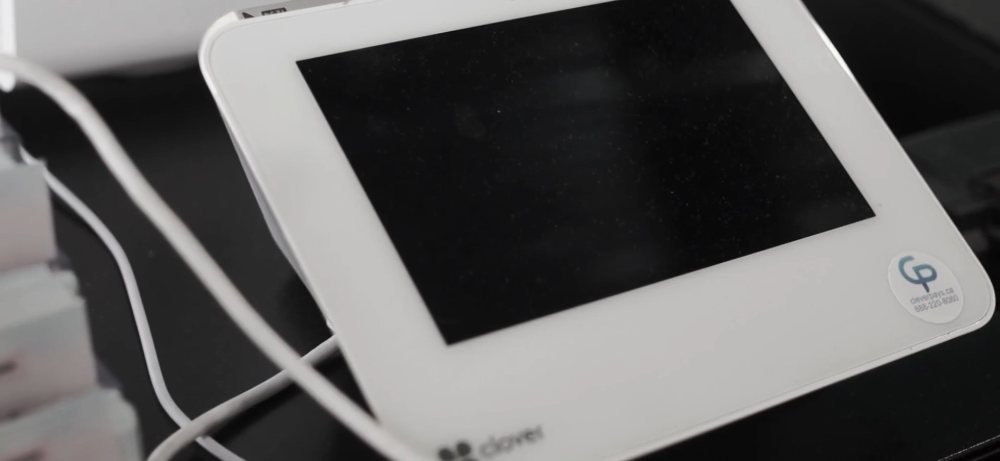
We can read a recent statement with you and show the effective rate and each fee line. We will walk you through what each charge is, and we recommend and set up Clover and other terminals or gateways. We answer in English and French.
Common mistakes
- Choosing on one advertised rate and skipping the monthly and equipment fees.
- Not checking the renewal date, which can bring a six-month extension.
- Assuming the processor handles disputes. The card networks and issuers decide them.
Related terms
- Acquirer: the bank or company that holds your merchant account.
- Payment gateway: the link that carries online sales to the processor.
- ISO: an independent sales organization that sells processing under an acquirer.
- Front-end processor: the processor that handles authorization and routing.
- Merchant account: the account that lets you accept cards.
- Interchange-plus pricing: a model where the processor's markup is listed alone.
Common questions
Is a payment processor the same as a payment gateway?
No. A gateway carries an online or remote sale to the processor. A processor handles the sale from there. Some companies offer both.
Is a payment processor the same as an acquirer?
Sometimes. An acquirer holds your merchant account and has a direct contract with the networks. A processor may be the acquirer, or work for one. Ask which party you sign with.
How do I know if I am paying too much to my processor?
Work out your effective rate from your statement. Then put the markup lines next to a written quote. If you cannot find the markup, ask your processor in writing.
Sources
- FCAC, Code of Conduct for the Payment Card Industry in Canada, read 6 October 2026.
- FCAC, Your rights as a merchant, read 6 October 2026.
- Interac, Understanding fees, read 6 October 2026.
- CleverPays, Best payment processors in Canada, for bank referrals, checked 1 October 2026.